
As a parent, you may think of back-to-school as a magical time of shiny new school supplies and excitement for your child, but many kids feel anxious, overwhelmed, or sad when heading back to school. These feelings are completely normal and valid — and more common than you’d think! Even positive change can take an emotional toll on kids and parents alike. However, there are easy, practical emotional tools and strategies that can help support the transition back to school.
Understanding the Back-to-School Blues
Children have a variety of common emotional responses to back to school that can include anxiety, sadness, irritability, and withdrawal as well as sleep or appetite changes. There are, likewise, a number of possible causes of these responses; they could be due to separation anxiety, social stress, academic pressure, or even just the changes in routine. Even confident kids can feel unsettled and suffer from the “Back-to-School Blues.”
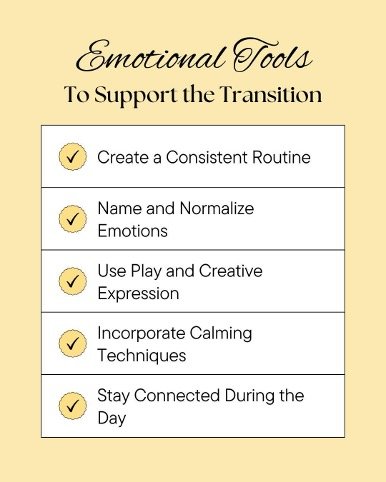
Emotional Tools to Support the Transition
- Create a Consistent Routine. Emphasize predictability and structure to your child as calming. It may help to use visual schedules or charts. We suggest prepping for school the night before.
- Name and Normalize the Emotions. Help your child to label their feelings. It helps just to say out loud that, “I feel nervous” or “I miss summer.” Make sure to validate rather than dismiss your child’s emotions; no matter what they are feeling, their feelings are valid. You may want to create and incorporate simple emotional check-in activities into your daily routine.
- Use Play and Creative Expression. As you may have heard us say before, “Play is the language of children.” If your child is struggling, it may help to use drawing, role-play, or storytelling to act out school scenarios. For example, you could have your child pretend to be the teacher to explore their concerns in the classroom.
- Incorporate Calming Techniques. Some useful methods to use with children in this situation are deep breathing, grounding techniques, and the use of transitional objects (a comfort object) in their backpacks.
Stay Connected During the Day. It’s important for your child to feel connected to you throughout the day as their source of safety and security. You might utilize notes in their lunchbox, after-school rituals (like a snack and talk time), or the use of “worry stones” or other small reminders of home.
When to Seek Extra Support
You can expect the “Back-to-School Blues” to get better within a few weeks in most cases. Signs that a child might need professional help include persistent school refusal, major behavioral changes, or ongoing sleep or eating issues. Play therapy can help children to explore and manage back-to-school emotions in a developmentally appropriate way.
Conclusion
As caregivers, remember to take care of your own wellbeing! Self care is vitally important. Please keep in mind that setbacks are a normal part of child development, and you’re not alone.
We’re here for you if you need help. Schedule an appointment at Sunshine State Counseling Center today by calling (239) 495-7722.